

Power distribution systems are the backbone of modern electrical infrastructure, ensuring that electricity generated at power plants reaches homes, businesses, and industries efficiently and safely. Understanding the different types of power distribution systems is crucial for electrical engineers, contractors, and facility managers when planning or maintaining electrical networks. This article provides a comprehensive breakdown of the four primary types of power distribution systems.
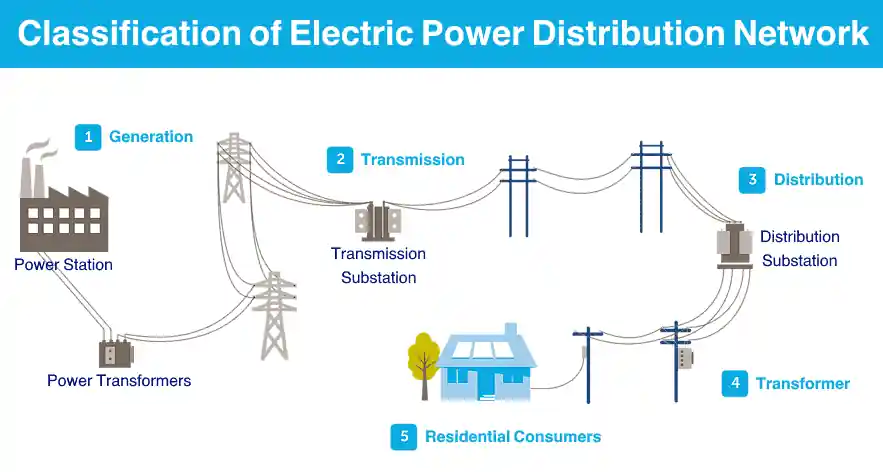
The radial system is the simplest and most commonly used configuration in residential and rural areas. Power flows in a single direction from the substation to the end users.

A ring main system forms a closed loop where the power can flow in either direction, providing redundancy and improved reliability.
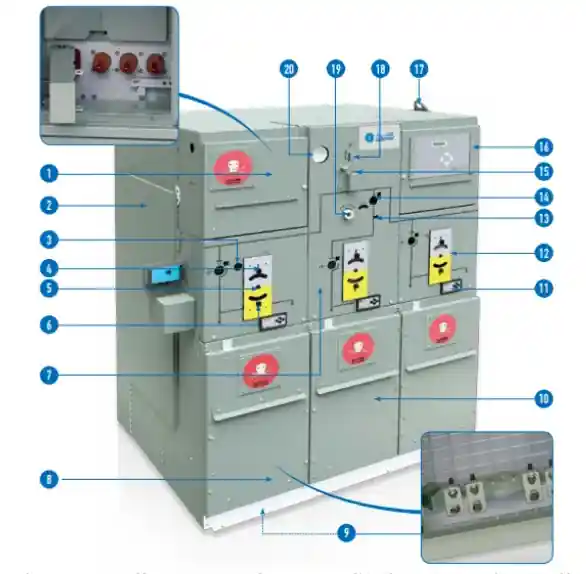
The loop system is similar to the ring main but is open-ended, typically used in commercial and urban areas. It allows for selective switching between multiple sources.

The interconnected system is the most advanced and reliable setup. Multiple substations are connected through multiple feeders, allowing seamless power flow and redundancy.
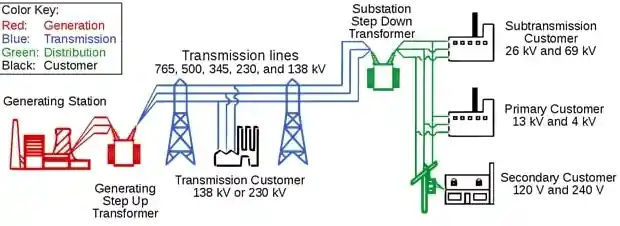
According to IEEMA, the adoption of interconnected and loop systems is rising in urban smart grid development. ABB ja Schneider Electric offer modular and automated solutions for ring and loop systems, optimizing performance through SCADA integration.
The push toward grid modernization ja renewable energy integration also favors more adaptive systems like loop and interconnected models. The IEEE Smart Grid Report highlights how distribution automation (DA) technologies are key to future-ready networks.
| Distribution Type | Cost | Reliability | Complexity | Best For |
|---|---|---|---|---|
| Radial | Low | Low | Simple | Rural & basic residential areas |
| Ring Main | Moderate | Medium | Medium | Urban & medium-load industries |
| Loop | Moderate | Medium-High | Medium | Commercial & mixed developments |
| Interconnected | High | High | High | Critical & urban power networks |
The interconnected distribution system offers the highest reliability due to its multiple power sources and redundancy paths.
Yes, especially in urban apartment complexes where medium-voltage reliability is essential.
Yes, but it involves adding switchgear and reconfiguring feeder paths, often used during urban infrastructure upgrades.
Understanding the four types of power distribution systems—Radial, Ring Main, Loop, and Interconnected—is vital for modern power network planning. While each type has its strengths and suitable applications, choosing the right one depends on factors such as cost, criticality, scalability, and urban density.